
Understanding how negligence is established in side-impact collisions requires a careful review of traffic law, evidentiary standards, and the unique mechanics of T-bone crashes. A San Jose Car Accident Lawyer focused on intersection collision liability often begins by explaining that these accidents differ from rear-end or head-on crashes because fault is rarely presumed and must be proven through layered factual analysis. The legal process centers on whether a driver failed to exercise reasonable care under the circumstances and whether that failure directly caused harm.
From a civil liability perspective, T-bone crashes most often occur at intersections governed by traffic signals, stop signs, or yield controls. A San Jose Car Accident Lawyer handling right-of-way disputes typically examines how California negligence law applies when two vehicles lawfully occupy crossing paths. Because these collisions frequently involve disputed signal timing or driver perception, courts rely heavily on objective evidence rather than personal recollection alone.
Understanding T-Bone Collisions Through a San Jose Car Accident Attorney Analysis
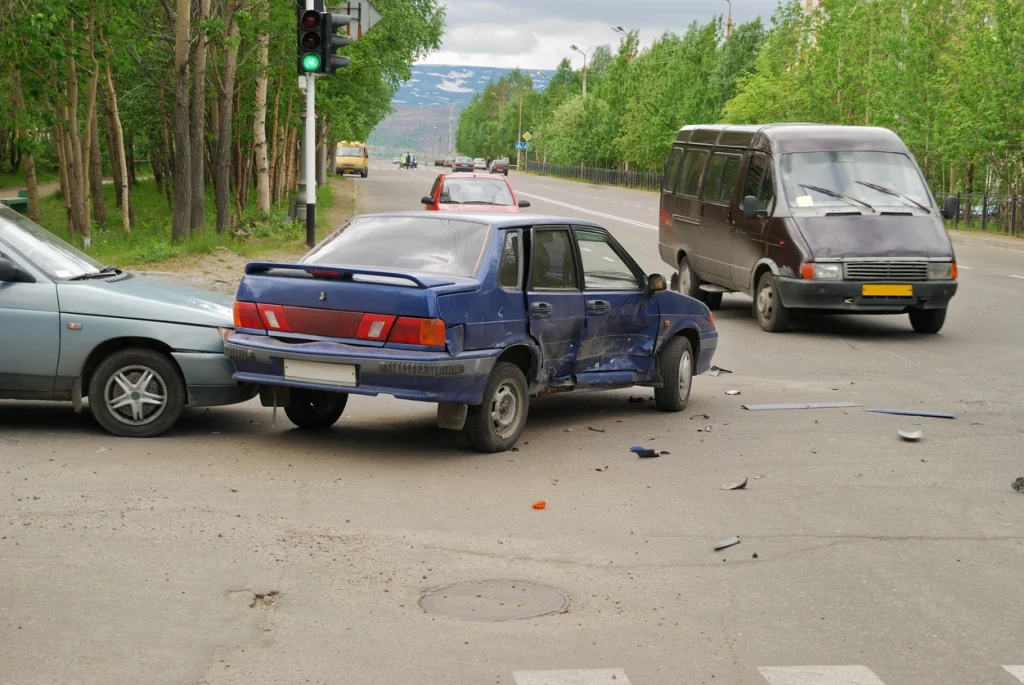
A side-impact collision, commonly referred to as a T-bone crash, occurs when the front of one vehicle strikes the side of another at a perpendicular angle. A San Jose Car Accident Lawyer experienced in T-bone crash litigation often notes that these collisions generate severe injuries because vehicle sides provide less structural protection than front or rear crumple zones. The severity of harm, however, does not determine liability. Liability turns on negligence, which must be demonstrated through legal proof rather than assumptions.
Negligence under California law requires showing duty, breach, causation, and damages. A San Jose Car Accident Attorney applying California negligence standards evaluates each element independently. All drivers owe a duty to operate their vehicles with reasonable care. Breach occurs when traffic laws or accepted driving norms are violated. Causation requires a direct link between that breach and the collision, while damages encompass physical, emotional, and financial harm.

Legal Standards Applied by a San Jose Car Accident Lawyer in Side-Impact Cases
California follows a pure comparative negligence system, meaning fault may be shared between drivers. A San Jose Car Accident Lawyer navigating comparative fault principles recognizes that even a partially responsible driver may still recover damages reduced by their percentage of fault. This framework makes precise fault allocation essential in T-bone crashes where both drivers may claim the right of way.
Judges and juries rely on statutory rules of the road to assess breach. Vehicle Code provisions governing traffic signals, stop signs, and turning movements provide the foundation. A San Jose Car Accident Lawyer referencing statutory traffic duties often emphasizes that violations such as running a red light or failing to yield constitute strong evidence of negligence, though they are not always conclusive.
Intersection Dynamics Examined by a San Jose Car Accident Attorney
Most T-bone crashes occur at intersections, making intersection design and traffic control central to liability analysis. A San Jose Car Accident Lawyer assessing intersection collision evidence evaluates signal sequencing, signage placement, and visibility conditions. Malfunctioning signals or obscured signs may complicate fault determination, requiring expert testimony or municipal records.
Traffic signal timing data can reveal whether a driver entered the intersection unlawfully. A San Jose Car Accident Lawyer reviewing signal phase records may obtain logs showing green, yellow, and red intervals. These records, combined with vehicle speed calculations, help reconstruct events objectively.
Right-of-Way Rules and San Jose Car Accident Lawyer Interpretations
Right-of-way laws dictate which driver must yield in specific situations. A San Jose Car Accident Attorney analyzing right-of-way compliance considers whether a driver turned left across oncoming traffic, entered from a stop-controlled street, or failed to yield while making a U-turn. Each scenario carries distinct legal obligations.
In T-bone crashes involving left turns, courts often scrutinize whether the turning driver waited until the movement could be made with reasonable safety. A San Jose Car Accident Lawyer focusing on left-turn liability may highlight that a green signal alone does not grant unconditional priority if oncoming traffic poses an immediate hazard.
Evidence Collection Methods Used by a San Jose Car Accident Attorney
Establishing negligence depends on credible evidence. A San Jose Car Accident Lawyer building a T-bone collision case gathers physical, documentary, and testimonial proof. Vehicle damage patterns reveal angles of impact and relative speeds. Skid marks, debris distribution, and roadway gouges further corroborate collision dynamics.
Witness testimony often plays a decisive role. A San Jose Car Accident Attorney evaluating eyewitness reliability examines vantage points, reaction times, and consistency between accounts. Courts recognize that memory may be flawed, which is why corroboration through independent evidence is critical.
Police Reports and the Role of a San Jose Car Accident Lawyer
Traffic collision reports prepared by law enforcement provide an initial narrative of events. A San Jose Car Accident Lawyer interpreting police reports treats them as informative but not determinative. Officers may cite one driver for a traffic violation, but civil courts independently assess negligence based on the totality of evidence.
Police reports often include diagrams, statements, and preliminary fault assessments. A San Jose Car Accident Lawyer cross-referencing report findings uses these details as a starting point rather than a final conclusion.
Digital Evidence Reviewed by a San Jose Car Accident Attorney
Modern vehicles and intersections generate electronic data. A San Jose Car Accident Attorney utilizing digital crash evidence may analyze event data recorders, traffic camera footage, and dashcam recordings. These sources can confirm speed, braking, and signal compliance.
Municipal traffic cameras are often maintained by local agencies. A San Jose Car Accident Attorney requesting government-held footage may rely on public records procedures governed by statutes such as the California Public Records Act, supported by guidance from https://www.chp.ca.gov which outlines collision investigation practices and roadway safety oversight.
Accident Reconstruction Through a San Jose Car Accident Lawyer Lens
When fault is contested, accident reconstruction experts provide technical analysis. A San Jose Car Accident Lawyer coordinating reconstruction testimony works with engineers who apply physics principles to determine vehicle trajectories and impact forces. Courts frequently accept this testimony when grounded in reliable methodology.
Reconstruction findings can clarify whether a driver had sufficient time to perceive and avoid the collision. A San Jose Car Accident Lawyer presenting time-distance calculations demonstrates how reaction times intersect with signal changes and vehicle speed.
Causation Analysis by a San Jose Car Accident Attorney
Beyond proving breach, causation links negligent conduct to harm. A San Jose Car Accident Attorney addressing proximate cause must show that the collision was a foreseeable result of the defendant’s actions. Intervening factors, such as sudden mechanical failure, may complicate this analysis.
Medical evidence establishes the connection between the collision and injuries. A San Jose Car Accident Lawyer correlating medical records with crash mechanics ensures that claimed injuries align with the forces involved in a side-impact collision.

Comparative Negligence Considerations for a San Jose Car Accident Lawyer
In many T-bone cases, both drivers allege fault against the other. A San Jose Car Accident Lawyer managing comparative negligence arguments evaluates whether distraction, excessive speed, or impaired visibility contributed to the outcome. Courts assign percentages of fault based on each party’s conduct.
Even minor contributory factors can influence damage calculations. A San Jose Car Accident Attorney quantifying fault allocation emphasizes precise factual distinctions to ensure proportional responsibility.
Common Defenses Addressed by a San Jose Car Accident Lawyer
Defendants often argue sudden emergency or unavoidable accident. A San Jose Car Accident Lawyer countering emergency defenses examines whether the situation truly left no reasonable alternative. Courts generally reject this defense if the emergency arose from the defendant’s own negligence.
Mechanical failure claims require proof of unforeseeable defects. A San Jose Car Accident Lawyer scrutinizing maintenance records assesses whether proper vehicle upkeep could have prevented the failure.
Insurance Investigations Reviewed by a San Jose Car Accident Lawyer
Insurers conduct independent investigations to assess liability. A San Jose Car Accident Lawyer reviewing insurer determinations understands that these findings are not binding in court. Insurance adjusters apply internal guidelines that may differ from legal standards.
Disputes often arise when insurers assign shared fault. A San Jose Car Accident Lawyer analyzing coverage decisions relies on statutory and case law rather than insurer policy language alone.
Litigation Process Explained by a San Jose Car Accident Lawyer
When settlement efforts fail, litigation may proceed. A San Jose Car Accident Lawyer preparing for trial engages in discovery, depositions, and motion practice. Discovery uncovers additional evidence such as cell phone records or vehicle maintenance logs.
At trial, the burden of proof rests on the plaintiff. A San Jose Car Accident Lawyer presenting a negligence narrative integrates evidence cohesively to meet the preponderance of evidence standard.
Role of Traffic Law Expertise in San Jose Car Accident Lawyer Strategy
Traffic laws evolve through legislative amendments and judicial interpretation. A San Jose Car Accident Lawyer staying current on Vehicle Code changes ensures arguments align with contemporary standards. Courts expect counsel to articulate how specific statutes apply to factual circumstances.
Judicial precedents guide liability analysis. A San Jose Car Accident Lawyer referencing appellate decisions frames arguments within established legal reasoning rather than speculative theory.
Long-Term Consequences Considered by a San Jose Car Accident Lawyer
T-bone collisions often result in lasting injuries due to lateral force transmission. A San Jose Car Accident Lawyer considering long-term damages evaluates ongoing medical care, rehabilitation needs, and diminished earning capacity. These factors influence damage calculations but remain distinct from liability determination.
Economic analysis must be supported by documentation. A San Jose Car Accident Lawyer correlating financial losses with injury impact ensures that claimed damages reflect actual consequences of the collision.
Settlement Evaluation Through a San Jose Car Accident Lawyer Perspective
Most civil cases resolve before trial. A San Jose Car Accident Lawyer assessing settlement value weighs evidence strength, comparative fault exposure, and litigation risk. Settlement discussions rely on objective analysis rather than emotional appeal.
Courts encourage resolution but do not compel agreement. A San Jose Car Accident Lawyer balancing negotiation and trial readiness maintains preparedness for either outcome.
Importance of Objective Proof for a San Jose Car Accident Lawyer
Ultimately, negligence in T-bone crashes is proven through facts, not assumptions. A San Jose Car Accident Lawyer emphasizing evidentiary rigor relies on documentation, expert testimony, and statutory interpretation. Emotional narratives carry limited weight without factual support.
Judicial outcomes reflect careful evaluation. A San Jose Car Accident Lawyer aligning arguments with legal standards ensures that each element of negligence is addressed systematically.
Integrating Public Safety Standards in San Jose Car Accident Lawyer Analysis
Public safety standards inform reasonable care expectations. A San Jose Car Accident Lawyer referencing roadway safety principles considers guidelines issued by transportation authorities. These standards help define acceptable driving behavior under similar circumstances.
Intersection design and signal visibility influence driver duties. A San Jose Car Accident Lawyer factoring environmental context acknowledges that negligence assessments account for real-world conditions.
Final Observations from a San Jose Car Accident Lawyer Framework
Proving negligence in T-bone crashes requires a disciplined legal approach grounded in evidence and statutory interpretation. A San Jose Car Accident Lawyer applying comprehensive liability analysis examines duty, breach, causation, and damages within California’s comparative negligence system. Through careful reconstruction, documentation, and legal reasoning, fault allocation becomes a reasoned conclusion rather than speculation.
For readers seeking deeper contextual understanding of how these principles are applied locally, judicial discussions often intersect with regional practice insights reflected in analyses associated with a San Jose Car Accident Lawyer, where negligence standards in T-bone collisions are examined through the lens of California traffic law, evidentiary burdens, and comparative fault doctrine without altering the neutral application of established civil liability principles.
By focusing on objective proof and established legal doctrine, a San Jose Car Accident Lawyer committed to analytical precision ensures that T-bone collision claims are evaluated according to law rather than assumption, reinforcing the integrity of civil liability determinations.